INSIGHTS / STEVE FOWLER
What a storefront classification costs a studio that has not built an audience
2026-09-18
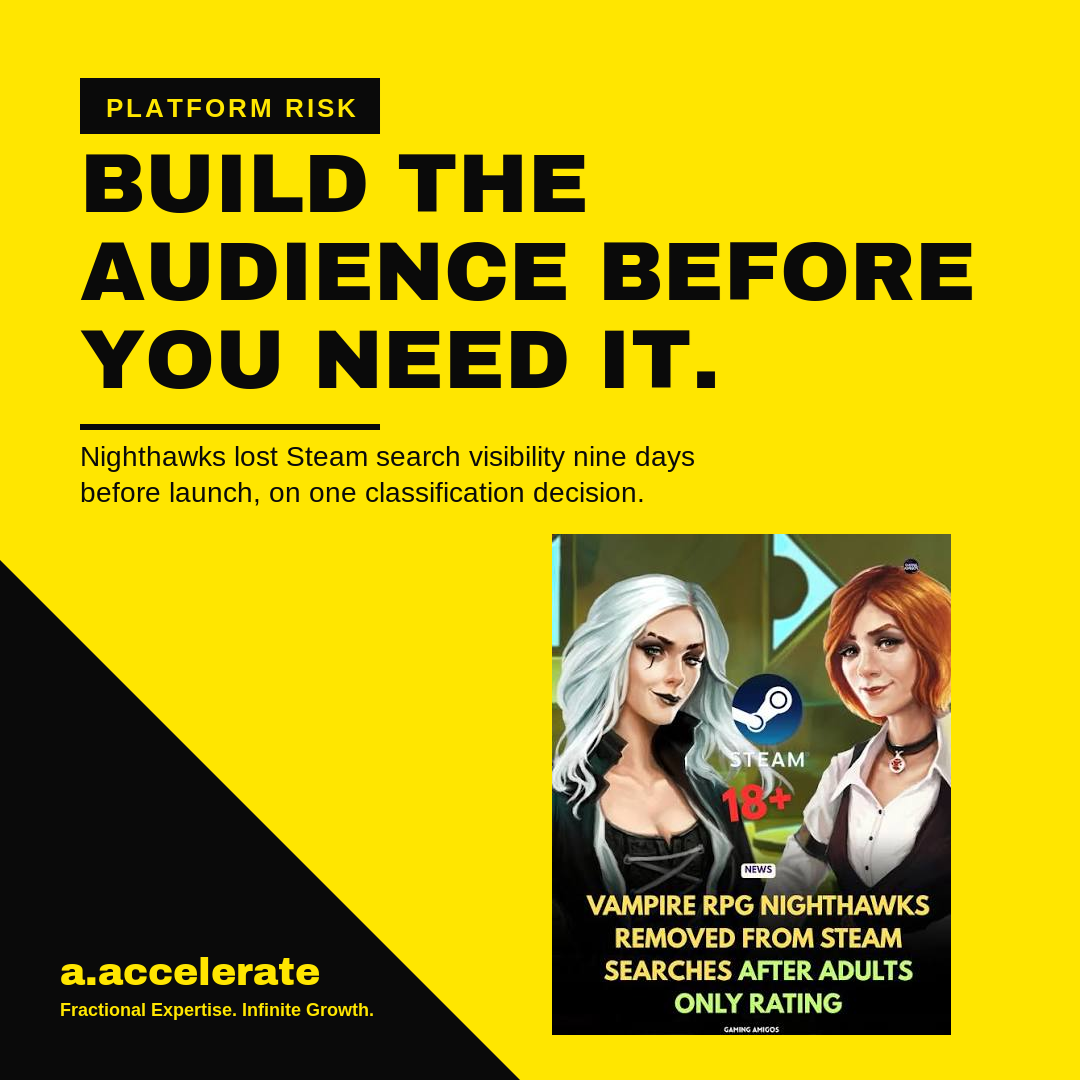
Earlier this week, Dave Gilbert of Wadjet Eye Games reported that Steam had classified his game, Nighthawks as Adults Only, nine days before its release. An AO tag changes distribution. The title drops out of Steam search, viewing it requires an age-verified account, and some countries delist it. Valve removed the rating on Tuesday, after the press picked up the story.
Wadjet Eye has published narrative games since 2006, they have good reviews, and they have about 24,000 followers on X. I assume Gilbert has press contacts who read his email and players who repeat what he says, and those most likely helped him get Valves attention.
The game launches in four days from now and has an estimated 30K – 40K wishlist based on GameDiscoverCo's Steam Hype tracker. A studio can hold twenty years of goodwill and still enter launch week relying on Steam's search and recommendation systems to supply its audience. The platform controls those systems and can change them without notice.
An alternate approach to reducing reliance on platform discoverability. Last year we worked on Shape of Dreams, from Neowiz and Lizard Smoothie, a studio founded in 2023 by college students. It was their first game and had effectively no paid budget, so our team was the marketing plan. We started six months out on daily short-form video, a Discord staffed every day, and an unpaid creator program that rewarded content with access, art assets and developer feedback for coverage.
The game passed 500,000 units in two weeks and a million within four months. On September 17 at Tokyo Game Show it launched on PS5, Switch 2 and Xbox with Game Pass. The product earned those results and the work made it findable. Had Steam misclassified that game two weeks out, the response would not have depended on Steam.
We reduced reliance on platform algorithms by investing in community management, content marketing, organic creators, sentiment and press. This is the day to day dirty work needed to build a fanbase, and it determines what a studio can do in the week something goes wrong. Studios have four ways to get it done.
- An agency is priced around commercial moments, then goes quiet.
- A publisher invests at the project level, and attention follows portfolio position.
- An internal hire gives the deepest commitment at a fixed cost carried for years before revenue.
- A small senior team embedded with the studio carries the always-on work across projects.
None of the four creates an audience for a game nobody wants. Each compounds interest that already exists.
Wadjet Eye entered launch week with twenty years of relationships. Lizard Smoothie entered with six months of audience work and sold a million units. Both positions were built in advance.