INSIGHTS / STEVE FOWLER
The Early Access launch IS the launch.
2026-10-28
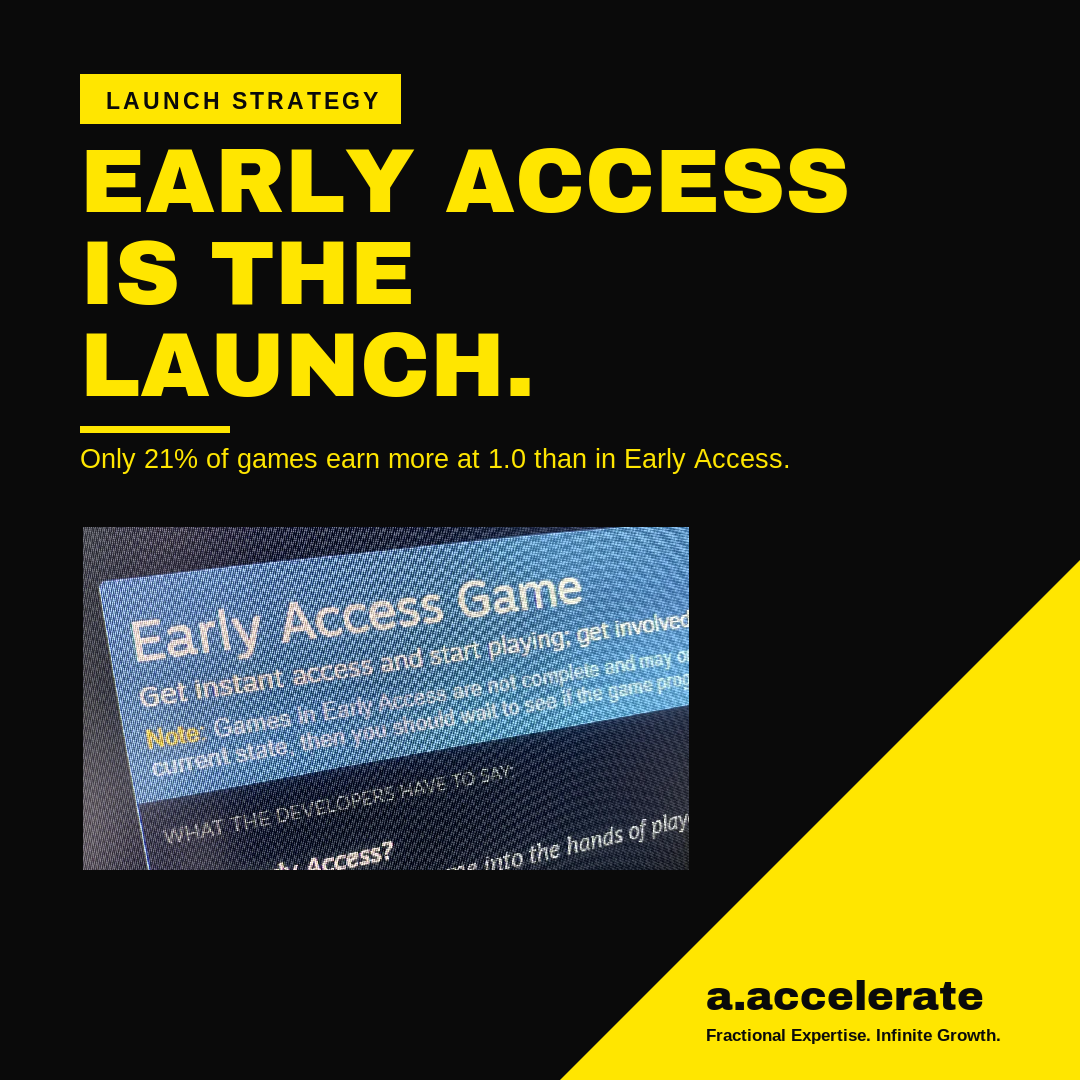
GamesIndustry.biz published an article yesterday that every studio planning an Early Access release should read.
According to SteamDB, 2,924 games launched in Early Access on Steam through mid-October 2026. That's up 18% from last year and 60% from 2020, representing 13.7% of all Steam releases.
But here's the more interesting statistic from GameDiscoverCo:
Only 21% of games earned more in their first 30 days at 1.0 than during their first 30 days of Early Access.
For nearly 80%, Early Access was the bigger commercial launch.
The article interviews developers from Iron Gate, Unknown Worlds, Supergiant and others who agree: players treat Early Access like a real launch, whether developers want them to or not.
As Richard Svensson from Iron Gate points out, players will forgive less content, but not a lack of polish.
Last summer, my team helped take a PC survival game from Early Access to 1.0. We treated it like a major launch. Significant marketing spend, social media blitz, paid media, press outreach. Everything we'd normally do for a new release.
And what happened?
We reactivated some existing players, but new player acquisition was almost nonexistent.
We essentially spent a lot of money bringing the old audience back together.
Looking back, the market had already made up its mind during Early Access, when the game had a smaller marketing budget and a Steam page the team planned to improve later.
Studios need to rethink how they're allocating their marketing budgets.
Traditionally, Early Access meant releasing the game, gathering feedback, improving the product, and saving the big marketing push for 1.0.
But players aren't necessarily waiting for 1.0 anymore.
If Early Access is your game's first major introduction to players, that's where your launch marketing needs to happen.
Your Steam page should be ready, creators engaged, community team prepared, and paid media focused on that first week.
So where does that leave 1.0?
I'd treat it as a relaunch to an existing audience. Bring back lapsed players, introduce new content, consider a price increase, and expand to consoles or other platforms.
Those objectives don't require the same budget as launching to an entirely new audience.
One important caveat: if your Early Access build isn't ready, heavy marketing can actually hurt you. Negative reviews don't disappear at 1.0. In that case, focus on community, feedback, and improving the game through an invite-only playtest program before spending heavily on acquisition.
Before approving your next Early Access marketing plan, look closely at where you're putting the money.
Are you funding the actual launch, or saving your budget for a second launch that may never have the same commercial opportunity?